
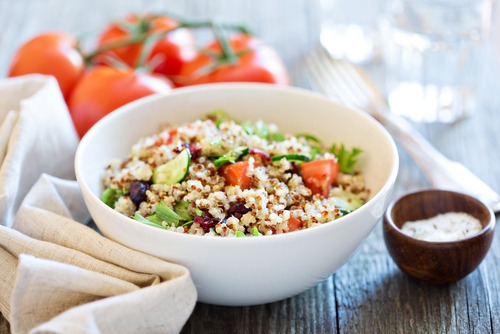
 Quinoa (pronounced keen-wah) is a grain that has become more of a household name in recent years. It belongs to a group of foods called “ancient grains” due to their historical beginnings. Quinoa has been consumed in South America for thousands of years and was once sacred to the Incas. Quinoa is actually a seed and not a typical grain. Because of this, it is known as a “pseudo-cereal.”
There are three types of quinoa seeds; white, red and black. Each has a slightly different flavor profile. Quinoa provides many nutritional benefits. It is gluten-free, non-GMO, whole grain. Those that have a gluten-intolerance, have celiac disease or even those that are avoiding gluten by choice can enjoy quinoa without issue.
Benefits of Quinoa
Quinoa is an excellent source of a complete protein. A complete protein is one that contains all nine essential amino acids. Essential amino acids cannot be made by the human body, therefore we must obtain them from our diet. Most plant-based foods do not contain all of the essential amino acids. Quinoa and buckwheat are unique in that they are indeed complete protein, just like animal proteins are. This also makes quinoa a great grain choice for eating a vegan or vegetarian diet.
Each cup of cooked quinoa contains 8 grams of protein, making it one of the highest protein-containing grains. Quinoa, being a whole grain, is a very good source of fiber, with 5 grams in every 1-cup serving. Fiber is very important to include in a healthy diet since it reduces blood sugar levels, reduces cholesterol, increases fullness, which can aid in weight management by reducing one’s overall calorie intake.
Quinoa contains a high amount of complex carbohydrates. These complex carbohydrates provide a good source of energy making quinoa a very good fuel source for athletes. Another appealing nutrition fact is that quinoa’s glycemic index is quite low. This means that eating quinoa doesn’t raise one’s blood sugar as much as eating other carbohydrates does. People with diabetes or high triglycerides would benefit from including foods like quinoa into their diet.
Quinoa is also a good source of nutrients such as magnesium, manganese, folate, phosphorus, iron, potassium and zinc. Additionally, quinoa contains several trace plant nutrients, known as phytochemicals. Two of these phytochemicals are quercetin and kaempferol. These act as antioxidants and are anti-viral, anti-inflammatory and anti-cancer agents.
Quinoa is easy to prepare and only takes 15-20 minutes to cook. It is cooked in a similar way as rice, one part grain to two parts water. It has a pleasant, mild, nutty flavor. If quinoa is new to you, try the following recipe to get you started.
Quinoa Power Lunch Salad
1 cup cooked quinoa
½ sliced avocado
½ cup grape tomatoes
¼ cup chopped walnuts
¼ cup dried cranberries
3 tablespoons fresh cilantro, chopped
3 tablespoons balsamic vinaigrette
Combine all ingredients and serve.
by CARA ZECHELLO
I will be available to meet with a family member to address any concern or questions regarding dietary needs or special diet for their loved one. I can be reached at Dodge Park Rest Home number (508-853-8180).